
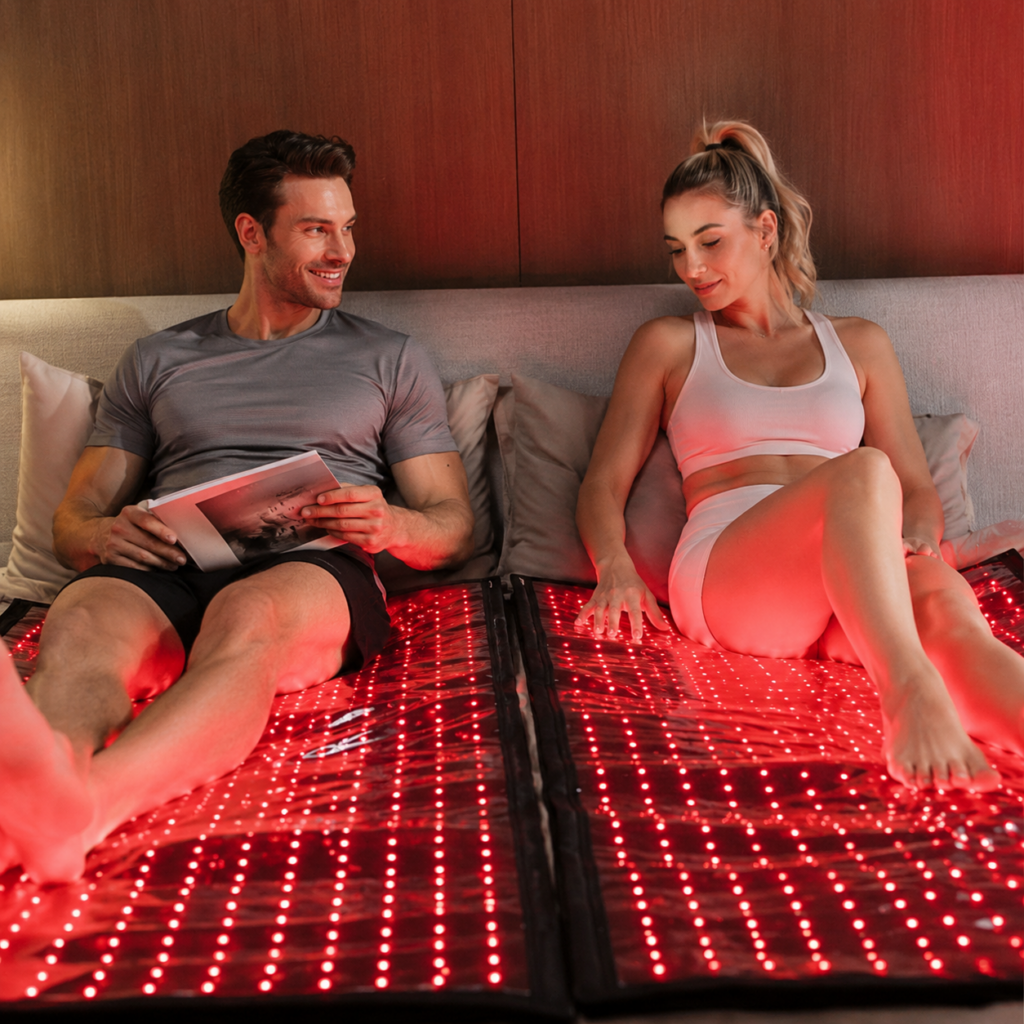
Red light therapy for recovery uses selected red and near-infrared wavelengths in an effort to influence cellular signaling after physical stress. Researchers have studied photobiomodulation for muscle soreness, strength recovery, fatigue, exercise performance, and markers associated with muscle damage. Some localized treatment studies report modest benefits under specific conditions, while other trials find no meaningful difference from placebo.
The practical takeaway is balanced: red light therapy may be a useful adjunct for some athletes and active adults, but it is not a guaranteed shortcut to faster recovery. The device, wavelength, dose, treatment area, timing, training status, and outcome being measured all matter. Sleep, hydration, nutrition, load management, and appropriate medical care remain the foundation of recovery.
What Does ‘Recovery’ Mean After Exercise?
Recovery is not one single process. After a demanding workout, the body must restore energy availability, manage normal inflammatory signaling, repair microscopic tissue disruption, and adapt to the training stimulus. A person can feel less sore without fully restoring strength, or regain performance while a blood marker remains elevated. That is why good studies use several outcomes rather than relying on one sensation.
Common recovery measures include:
- Delayed-onset muscle soreness (DOMS), often tracked for 24 to 72 hours after unfamiliar or intense exercise.
- Return of strength, power, range of motion, or repeated-effort performance.
- Perceived fatigue, readiness, sleep quality, and ability to complete the next planned session.
- Blood markers such as creatine kinase, which may reflect muscle stress but do not perfectly predict how a person feels or performs.
For an individual recovery plan, the most useful question is not simply whether red light therapy ‘works.’ It is whether a defined protocol produces a meaningful, repeatable improvement in the outcome that matters to you.
How Red and Near-Infrared Light May Affect Recovery
Red light therapy is also called photobiomodulation. Cells contain molecules that absorb certain wavelengths. Researchers propose that this interaction can influence mitochondrial activity, nitric-oxide signaling, reactive oxygen species, circulation, and downstream inflammatory pathways. In muscle, those signals may affect how tissue responds to exercise-related stress and adaptation.
This mechanism is plausible, but a biological response does not automatically equal a noticeable recovery benefit. Light must reach the intended tissue at an appropriate dose. Red wavelengths are often used for more superficial targets, while near-infrared wavelengths generally reach farther into tissue. Power, exposure time, distance, treatment area, and tissue characteristics can all change the delivered dose.
For a deeper explanation of wavelength, dose, and cellular signaling, see how red light therapy works.
Potential Recovery Goals People Explore
Muscle Soreness and Comfort
Some people use red or near-infrared light around hard training days in hopes of reducing soreness or improving how a treated area feels. Study results are mixed. Less soreness can be useful, but it should not be interpreted as proof that tissue is fully repaired or ready for maximal loading.
Return of Strength and Training Readiness
Strength recovery is a more functional outcome than soreness alone. Some pooled localized PBM data suggest a small benefit, but individual studies are not consistent. Athletes should continue using objective readiness measures, coach guidance, and progressive training decisions rather than using light therapy as permission to ignore fatigue.
Recovery Between Repeated Sessions
People with frequent practices, travel, or closely spaced events may be interested in any non-invasive modality that fits between sessions. Red light therapy generally requires no downtime, which can make it convenient. Convenience, however, is different from proven effectiveness; the protocol should still be evaluated against a defined outcome.
Sleep and Relaxation
A small whole-body evidence base has reported possible sleep-related changes, but this is not yet enough to promise better sleep. A quiet session may also feel relaxing independent of a physiological light effect. If sleep is the main recovery problem, address schedule, sleep environment, stress, caffeine, and possible medical causes directly.
Red Light Therapy Before or After a Workout?
Research has tested both pre- and post-exercise timing, but the strongest pooled signal in current exercise literature is for selected localized protocols used before exercise. That does not create a universal rule. A professional full-body system, a handheld laser, and a home LED panel do not deliver interchangeable doses.
Use timing as a goal-based decision:
- Before exercise: study when the goal is muscle endurance, fatigue resistance, or recovery from the upcoming session.
- After exercise: commonly chosen for convenience, relaxation, or a targeted post-workout routine, but evidence depends on the protocol and outcome.
- On rest days: may fit a consistent wellness schedule, although more frequent exposure is not automatically better.
Avoid copying minutes or distance from an unrelated study. Follow the settings for the actual device and discuss workout timing with the provider, especially when training volume is high or an injury is present.
What to Expect During a Professional Recovery Session
A professional session should begin with a brief goal and safety review. The treatment area is positioned close enough for the system’s intended dose, clean skin is exposed as directed, and recommended eye protection is used. The light may appear bright and feel gently warm, but it should not burn or feel painfully hot. Most people can return to normal activities afterward.
CEO2Health offers red light therapy in Los Angeles as well as a multi-wavelength red and near-infrared recovery system. Session format and positioning should be matched to the device, treatment area, and recovery goal.
Who May Consider Red Light Therapy for Recovery?
Red light therapy may appeal to athletes, fitness enthusiasts, active adults, and busy professionals who want a non-invasive addition to a broader recovery routine. A reasonable candidate understands that results vary, can follow a consistent protocol, and is willing to track a specific outcome instead of expecting a cure-all.
New or severe pain, major swelling, weakness, numbness, an inability to bear weight, or a suspected injury needs an appropriate clinical evaluation. Red light therapy should not mask symptoms, delay diagnosis, or replace rehabilitation and medical care.
How to Evaluate Whether It Is Helping
Choose one or two measures before the first session and keep other recovery habits reasonably consistent. Track them over an appropriate trial rather than judging a single exposure.
- Record soreness at the same time each day on a simple 0-to-10 scale.
- Use a repeatable performance measure, such as range of motion, submaximal strength, or a coach-selected readiness test.
- Note sleep duration, training load, hydration, and unusual stress that could explain changes.
- Reassess if there is no meaningful improvement rather than increasing dose on your own.
Book Red Light Therapy for Recovery in Hollywood and Los Angeles
A useful recovery protocol starts with a clear goal, realistic expectations, and settings matched to the treatment system. Red light therapy may complement a well-designed recovery routine, but it should be evaluated by how you feel, function, and train over time.
CEO2Health provides professional red light therapy in Hollywood for athletes, active adults, executives, and wellness-focused clients across Los Angeles. Book a session to discuss your recovery goals, treatment timing, and the most appropriate session format.
Frequently Asked Questions About Red Light Therapy for Recovery
Does red light therapy speed up muscle recovery?
Some localized photobiomodulation studies report modest improvements in strength recovery, endurance, or muscle-stress markers, while other trials report no benefit. Evidence for whole-body exercise recovery remains limited. Results should be described as possible and protocol-dependent, not guaranteed.
Does red light therapy reduce muscle soreness?
It may reduce soreness in some protocols or individuals, but findings are mixed. Soreness is also only one part of recovery and does not prove that a muscle is ready for maximal effort.
Should athletes use red light therapy before or after training?
Selected localized studies and a 2024 meta-analysis support pre-exercise use, but there is no universal timing rule for every device. Follow the protocol for the actual system and align timing with the specific recovery goal.
How often should I use red light therapy for recovery?
There is no universal frequency. Schedules vary by wavelength, dose, device, treatment area, training plan, and response. Use the provider’s or manufacturer’s device-specific guidance and avoid assuming that daily use is always better.
Can red light therapy replace rest days or physical therapy?
No. It should be considered an adjunct. Sleep, adequate nutrition, hydration, progressive load management, and prescribed rehabilitation have distinct roles that a light session cannot replace.
Is red light therapy the same as an infrared sauna?
No. Red light therapy uses selected red and near-infrared wavelengths to create a non-thermal photobiomodulation stimulus. An infrared sauna is designed primarily to heat the body. The experiences, doses, and evidence bases are different.
