
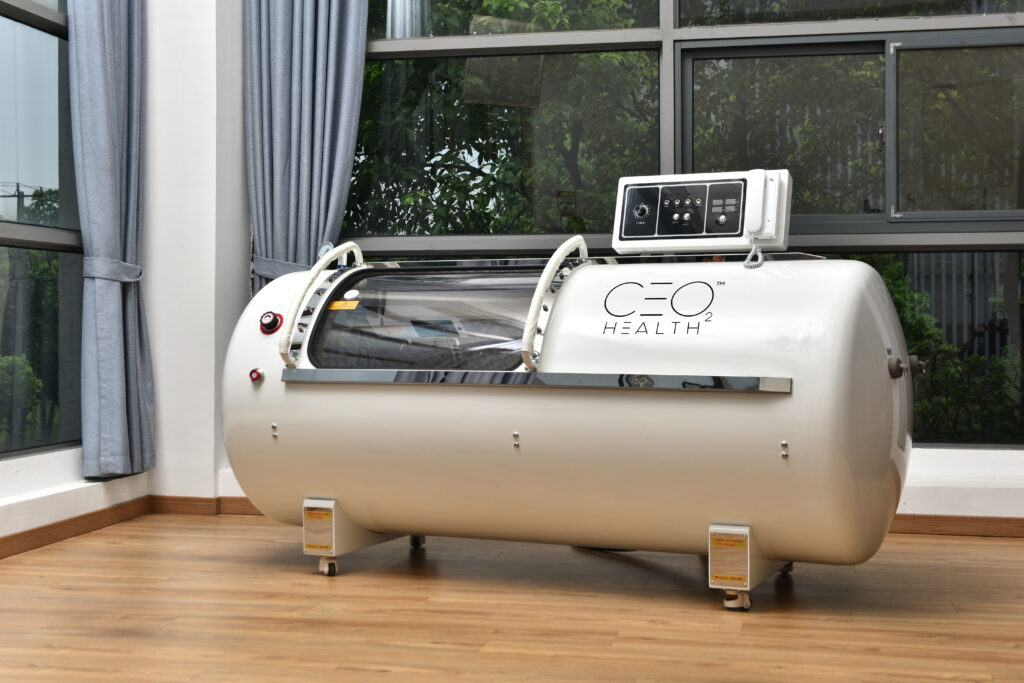
Hyperbaric oxygen therapy benefits come from one core mechanism: increasing oxygen delivery beyond what the body can achieve under normal conditions. By using a pressurized chamber to deliver pure oxygen, hyperbaric oxygen therapy supports wound healing, reduces inflammation, and improves recovery time across a range of medical and performance contexts.
Originally used for conditions like decompression sickness and carbon monoxide poisoning, hyperbaric oxygen therapy is now used more broadly for recovery, chronic wounds, and overall healing efficiency.
This article breaks down the benefits that you should know and how CEO2Health applies hyperbaric oxygen therapy in structured protocols designed for consistent results.
How Hyperbaric Oxygen Therapy Works
Hyperbaric oxygen therapy works by increasing how much oxygen your body can absorb and use. Inside a pressurized chamber, you breathe pure oxygen under increased pressure. This allows oxygen to dissolve into blood plasma, not just red blood cells. The result is improved oxygen transport across the circulatory system, including areas with limited blood vessels or reduced blood flow. In simple terms, more oxygen reaches the places that need it most. This matters because oxygen plays a direct role in the healing process, tissue repair, and cellular energy production. When oxygen availability increases, the body can repair damage more efficiently and support recovery at a deeper level.7 Benefits of Hyperbaric Oxygen Therapy
1. Faster Wound Healing and Tissue Repair
Hyperbaric oxygen therapy is widely used to support wound healing, especially in cases where the blood supply is limited. It can help with:- Chronic wounds that don’t heal properly
- Diabetic foot ulcers
- Skin grafts and soft tissue infections
2. Increased Oxygen Delivery Throughout the Body
One of the most important hyperbaric oxygen therapy benefits is improved oxygen delivery. Under normal conditions, oxygen transport depends mostly on red blood cells. In a pressurized environment, oxygen dissolves into blood plasma, allowing it to reach areas with poor circulation. This improves overall oxygen availability and supports the body’s ability to heal and recover.3. Reduced Inflammation and Swelling
Inflammation is part of the body’s natural healing response, but too much of it slows recovery. Hyperbaric oxygen therapy may help regulate the inflammatory response, which can:- Reduce swelling
- Decrease discomfort
- Support faster recovery after injury or stress
4. Formation of New Blood Vessels
HBOT supports the formation of new blood vessels through processes linked to vascular endothelial growth factors. This matters because better circulation improves long-term healing. New blood vessels increase blood flow to damaged tissue, helping sustain recovery even after treatment sessions.5. Faster Recovery Time
By improving oxygen delivery and supporting tissue repair, hyperbaric oxygen therapy can reduce recovery time. This applies to:- Injury recovery
- Post-surgical healing
- Recovery after intense physical stress
6. Support for Brain Function
Hyperbaric oxygen therapy increases oxygen delivery to brain cells, which may support cognitive function in certain situations. It has been studied in contexts involving neurological recovery and brain health, although results vary and research is still ongoing.7. Medical Use in Serious Conditions
Hyperbaric oxygen therapy is an established medical treatment for several serious conditions, including:- Decompression sickness
- Carbon monoxide poisoning
- Crush injuries
- Severe infections
Who Benefits Most from Hyperbaric Oxygen Therapy
Hyperbaric oxygen therapy is not one-size-fits-all, but it is commonly used in situations where healing or recovery is limited. It may be relevant for:- Individuals with chronic wounds or slow healing
- People recovering from injury or surgery
- Athletes focused on recovery and performance
- Patients with specific medical conditions that affect blood flow or oxygen delivery
What Determines Results with Hyperbaric Oxygen Therapy
Not all hyperbaric oxygen therapy leads to the same results. Outcomes depend on:- Consistency of treatment sessions
- Pressure levels inside the hyperbaric chamber
- Overall oxygen delivery and absorption
- How the therapy fits into a structured plan
